Evidence from check-in to arrival
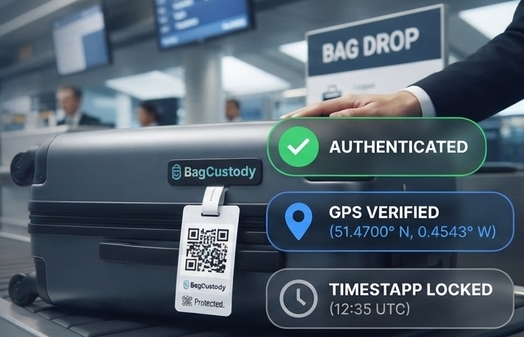
BagCustody (bagcustody.com) creates a fingerprinted digital chain-of-custody record for checked luggage. Photos, timestamps, location records and bag identifiers help document what you handed over and compare it with what you collect at arrival.
When airport bag-tag switching or luggage tampering is suspected, this record can support your account of events and help an airline, investigator or legal adviser assess a discrepancy. It is supporting evidence—not a guarantee of innocence, physical bag security or a successful legal claim.
Airline custody and legal responsibility
U.S. aviation security requirements in 49 CFR § 1544.203 — Acceptance and screening of checked baggage set out duties for aircraft operators covered by the regulation:
- Screening controls (§ 1544.203(a) and (c)). Operators must use their security-program procedures, facilities and equipment to prevent or deter unauthorized explosives or incendiaries in checked baggage and ensure required screening before loading.
- Carrier acceptance (§ 1544.203(b)). Checked baggage carried in the aircraft must be received by the operator’s authorized representative.
- Control after acceptance (§ 1544.203(d)). Operators must control accepted checked baggage under their security programs to prevent unauthorized explosives or incendiaries and access by persons other than an operator employee or agent.
Documenting drop-off can help establish the recorded time, location and visible condition of a bag before it enters airline custody. If tags or contents are later compromised, those records may help explain what changed and when. They do not independently prove everything that happened while the bag was out of sight.
These security requirements do not automatically establish liability for every loss, detention, delay or missed flight. International and domestic claims may also depend on the Montreal Convention, applicable law, claim deadlines and the facts of the incident. Consult an aviation attorney about specific legal remedies.
Risks of traveling without independent records
When luggage is altered out of sight, a lack of independent check-in evidence can make a discrepancy harder to explain. Potential consequences include:
- Interrogation, arrest or detention. A traveler linked to suspected contraband may face investigation, particularly in a foreign jurisdiction.
- Missed connections and severe delays. Airport security holds and customs investigations can disrupt onward travel.
- Missed appointments and business commitments. Disrupted itineraries can affect meetings, contracts and other time-sensitive plans.
- Difficulty substantiating your account. Without photos, bag identifiers, weight records and timestamps, explaining a suspected tag switch or tampering may be more difficult.
How BagCustody records your proof
- Bag Check-In. Snap or upload a photo showing the airline tag, QR code and tire/bottom wear. Record check-in timestamps, capture live GPS when available, and create a cryptographic evidence fingerprint. Add the bag’s color, approximate weight and three distinct items packed inside to help identify it if an exterior tag is removed or switched. Uploaded photos alone do not verify when or where the original image was taken.
- Chain-of-Custody Report. Assemble bag details, the itinerary, recorded events and signatures into a report. Fingerprints help detect changes to the recorded evidence; a Tamper PIN locks the local custody record, rather than replacing your account password.
- Printable QR Bag Tags. Print tags linked to the traveler’s name and trip details, including the route, flight and boarding gate.
- Arrival Carousel Verification. Compare the arriving bag with the check-in record, confirm safe pickup or flag a discrepancy, tag switch or missing bag.
- Timer & Emergency Escalation. Record timing and use the escalation tools when a bag is delayed or appears compromised. For immediate danger or detention, contact airport authorities, emergency services or your consulate directly; BagCustody is not an emergency-response service.
Documentation, not a legal guarantee
BagCustody helps preserve a traveler’s records. Cryptographic fingerprints detect changes to a recorded copy but do not verify the truth of every entry, prevent physical tampering or guarantee that authorities will accept a report. BagCustody does not provide legal representation or insurance.